


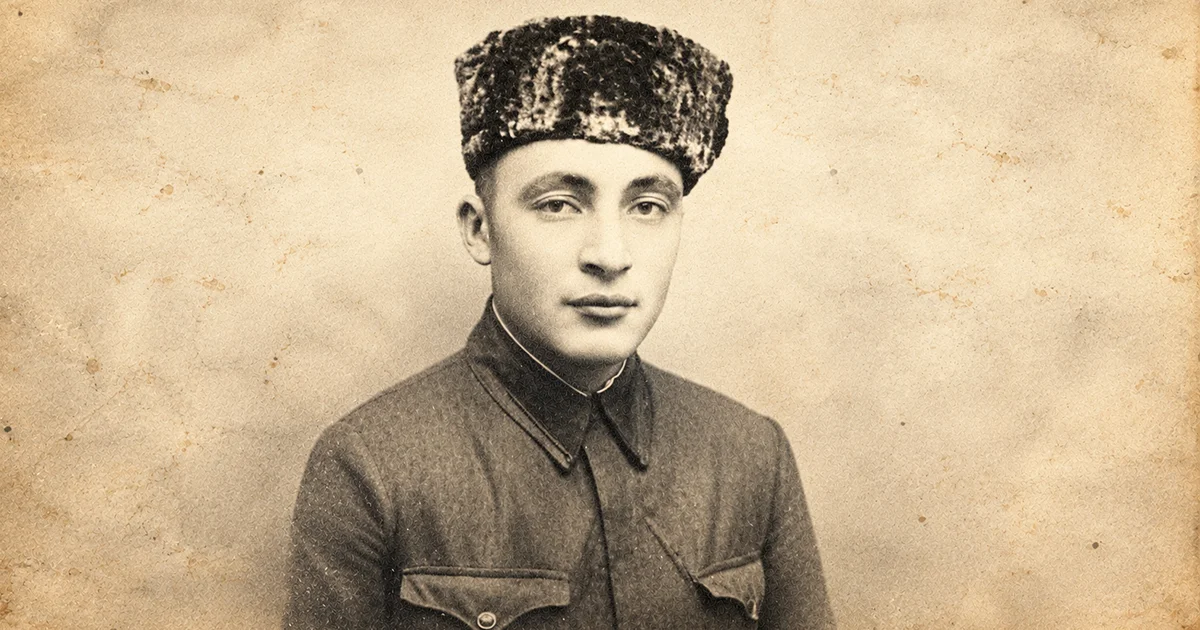
Fore (Khrist ephore) Nikolayevich Mosulishvili was born on 20 July 1916 in the village of Kvemo Machkhaani, in Sighnaghi District. Today, his name is associated with one of the significant episodes in the history of the Second World War in Georgia and Italy. In Italy, Fore Mosulishvili is remembered as a hero and participant in the anti-fascist resistance movement, while a house museum dedicated to him operates in his native village of Kvemo Machkhaani.
After completing secondary school, Fore Mosulishvili worked on a collective farm and later studied at the Lagodekhi Agricultural Technical School. Immediately after graduating in 1939, he was drafted into the Red Army. Before the outbreak of the Second World War, he was serving in Daugavpils, Latvia. In May 1941, his family received his last letter.
From the very first days of the war, Fore Mosulishvili found himself at the front. He was wounded in one of the battles and captured by German forces. Initially, he was held at the Kruszyna camp in Poland. The camp served as a coordination centre for recruiting Georgian servicemen, where officers and non-commissioned officers were trained for service in the Wehrmacht. At the end of 1943, Fore was transferred from Poland to France and subsequently to the Italian town of Stresa, in the Province of Novara.
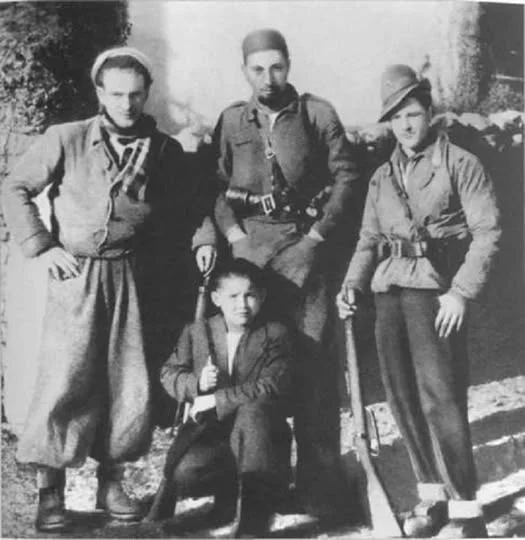
On 7 September 1944, he managed to escape from captivity and joined Italian partisans operating in Piedmont, together with more than seventy other Georgians. The Georgians were assigned to various partisan units. Fore Mosulishvili joined the Armand unit of the Peppino detachment, part of the Second Battalion of the 118th Remo Servadei Garibaldi Brigade.
During his time with the partisans, Fore took part in several military operations. His first operation took place on 14 September 1944, near the hospital in Omegna. Together with his comrades, he helped neutralise the guards stationed inside the building, enabling the partisans to seize control of it. Later, he was offered command of a larger unit, but declined because he was unfamiliar with the local area and did not speak Italian.
During subsequent operations, Fore Mosulishvili repeatedly demonstrated courage and resourcefulness. On one mission, he blew up a bridge near Domodossola in full view of German soldiers. On another occasion, disguised in a German officer's uniform, he managed to capture an enemy officer and bring him to the partisan camp.
The final battle of his life took place on 3 December 1944. Near the village of Colonia, on Motta Rossa Hill, the Armand unit was surrounded by German forces. At the time, the unit consisted of seventeen partisans, including seven Georgians. After a prolonged and fierce battle, Fore Mosulishvili and two other partisans were wounded, and the unit had also run out of ammunition.
The Germans demanded that the unit's commander surrender, promising to spare the lives of the others. Although Fore Mosulishvili was not the unit's commander, he presented himself as such in an attempt to save his comrades. According to the later recollections of partisan Mario Zinoni, Fore went out to face the Germans and declared that he preferred death to captivity. He took his own life, thereby saving the lives of the remaining sixteen partisans.
Fore Mosulishvili's sacrifice was duly recognised in Italy years later. On 28 February 1970, Italian President Giuseppe Saragat signed a decree posthumously awarding Fore Mosulishvili the Gold Medal of Military Valour. In 1971, the award was ceremonially presented to members of his family at the Italian Embassy in Moscow.
The participation of Georgian fighters in the Italian resistance movement was also commemorated in the places where they had fought against fascism. In Condove, a town in the Susa Valley in the Province of Turin, a street was named “Georgian Partisans Street.” An inscription on a column at the entrance to the street commemorates the Georgian fighters and their struggle for the freedom of Italy and Europe.
Fore Mosulishvili is buried in the town of Arona in northern Italy. His life story inspired Rezo Tabukashvili's documentary film The Alpine Star, made in 1979. In 1990, Fore Mosulishvili was also posthumously awarded the title of Hero of the Soviet Union.
Today, a house museum dedicated to Fore Mosulishvili is open in the village of Kvemo Machkhaani, Sighnaghi Municipality. His native village preserves the memory of a man whose life journey began in Kvemo Machkhaani, continued through the battlefields of the Second World War, and ultimately led him to the Italian resistance movement.
Sources:
Georgia and the West: Essays on the History of Military Relations, Tbilisi, 2012, pp. 140–141.
Fore Mosulishvili, Georgian Wikipedia.