


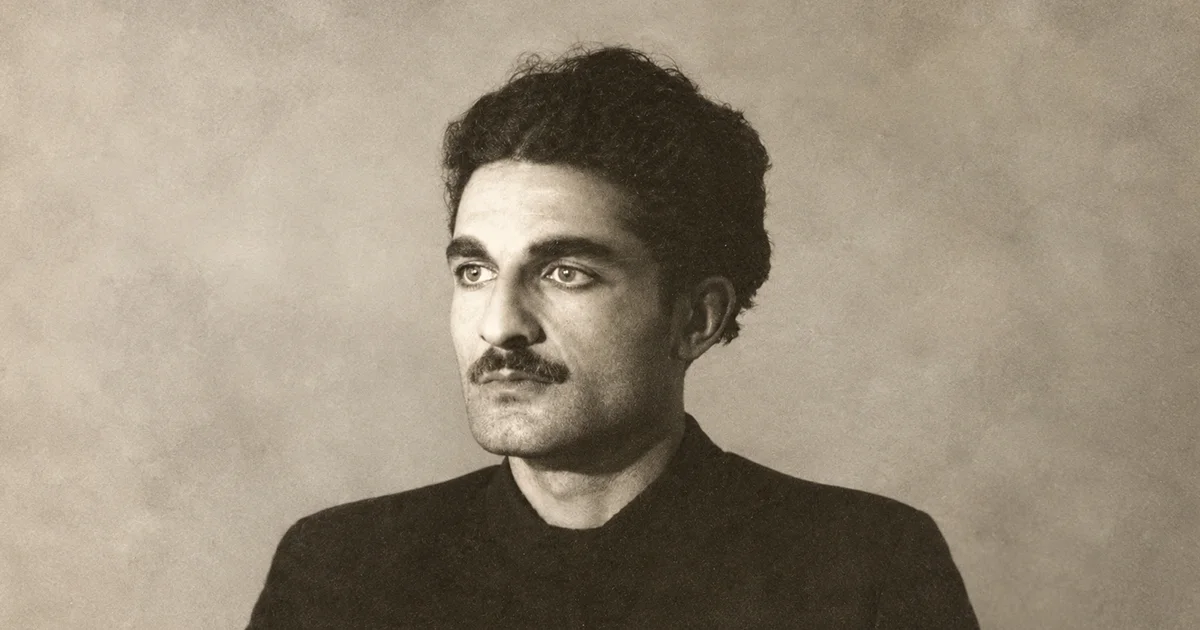
Hamlet Gonashvili was born on 20 June 1928 in the village of Anaga, Sighnaghi District. He was one of the most distinguished performers of Georgian folk music and a music educator. His extraordinary voice and distinctive performance style earned him recognition as “The Voice of Georgia.”
Initially, Hamlet Gonashvili studied biology and also worked at the Tbilisi Tourist Bureau. Later, he continued his studies at the Theatre Institute, where his musical talent became particularly evident. He also performed songs on the institute’s stage. Rector Mikheil Kveselava recognised his abilities and encouraged him to pursue singing professionally.
In 1953, Hamlet Gonashvili became a leading soloist of the Georgian State Song and Dance Ensemble, where he performed until 1969. That year, he became a soloist with the Rustavi State Song and Dance Ensemble. Given his exceptional vocal abilities, much of the ensemble’s repertoire was adapted to suit his voice and talents.
Gonashvili performed Kartlian-Kakhetian, Imeretian-Gurian and Megrelian songs, as well as Georgian Orthodox hymns and Abkhazian songs, with equal success. Works by Georgian composers also held an important place in his repertoire. Among the songs particularly associated with his performances are “Urmuli,” “Orovela,” “Tsintskharo,” “Tsmidao Ghmerto,” “Gaprindi, Shavo Mertskhalo” and “Daigvianes.”
The singer’s exceptional abilities were especially evident in his articulation of melodies. Composer Iakob Bobokhidze recognised this talent and adapted several well-known compositions to Gonashvili’s voice, including “Modi, Giambob,” “Tovli” and “Mzeo Tibatvisa.”
Gonashvili’s artistry uniquely combined a close connection to the roots of folk music with the aesthetic ideals of Georgian and Western European classical music. His soft, distinctive timbre, virtuoso vocal technique, refined musical taste and clarity of tone made a profound impression on listeners.
Together with the Rustavi Ensemble, Hamlet Gonashvili toured many countries around the world. International audiences also received his performances with great enthusiasm. During one such tour, in Paris, he was asked to perform “Mravalzhamieri” three times. His renditions of “Urmuli” and “Orovela” were later used abroad in films and large-scale public performances as remarkable examples of the human voice’s capabilities.
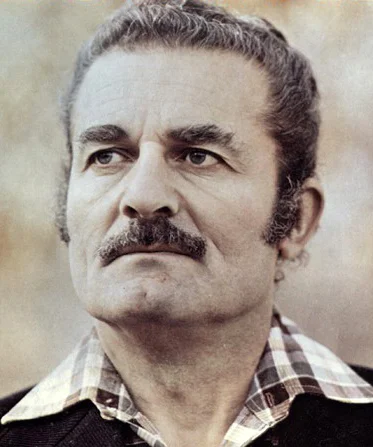
In 1967, Hamlet Gonashvili was awarded the title of Honoured Artist of Georgia, followed by the title of People's Artist of Georgia in 1980. In 1985, after his death, he was awarded the Zakaria Paliashvili Prize.
Hamlet Gonashvili passed away on 25 July 1985, at the age of 57. He is buried at the Didube Pantheon of Writers and Public Figures in Tbilisi. His performances remain among the most outstanding examples of Georgian folk music, and his voice, which earned him the title “The Voice of Georgia,” continues to hold an important place in Georgian musical culture.
Hamlet Gonashvili — “Shen Bicho, Anagurelo”
Hamlet Gonashvili — “Urmuli”
Hamlet Gonashvili — “Daigvianes”
Hamlet Gonashvili — “Khokhbis Kelivit Lamazi”
Hamlet Gonashvili — “Verkhvis Photoltan”
Hamlet Gonashvili — “Tsintskharo”
Sources:
- Encyclopedic Dictionary of Georgian Music, Tbilisi, 2015, p. 119.
- Badri Kutateladze, Didube Pantheon, Tbilisi, 2025, p. 114.
- Graves of Distinguished Georgians, Hamlet Gonashvili.